
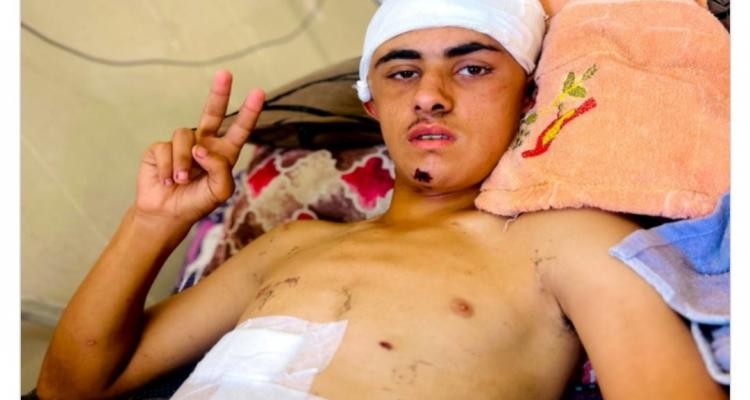
Gaza – Fadi Hijazi
Elsewhere in the world, athletes spend their days between training sessions and competitive matches, cheered on by fans and driven by dreams of trophies and glory But in Gaza, where death lurks around every corner, youth grow up surrounded by ruins instead of stadiums Here, dreams do not fade slowly—they are shattered abruptly Football becomes a distant memory, stadiums turn into rubble, and young people run after bread, not goals Applause is replaced by gunfire, and the sound of cheering by explosions
Mohammad Naeem Awad, an 18-year-old football player for Ittihad Beit Hanoun Club, was only steps away from achieving his lifelong dream of joining the Palestinian youth national team Hunger, however, forced him to leave his home in search of a bag of flour An Israeli bullet reached him before hope did—piercing his head, destroying part of his skull, and shattering not only his body but the future he had imagined Mohammad fell into a coma and later woke up partially paralyzed, carrying pain far heavier than his young age
I Was a Player.. Now I’m Prisoner Of My Bed
With a trembling voice and eyes filled with disbelief, Mohammad says
“I wanted to become a famous player, to raise Palestine’s name on the field Today, I can’t move my arms or legs The bullet didn’t just hit my head—it struck my dream, and the dreams of my siblings who looked up to me”
He adds: “For many days, my siblings and I went without a proper meal I decided to head to Zikim, in northern Gaza, to collect aid The moment I arrived, a bullet pierced my head I don’t remember anything after that When I woke up, I found myself unable to move Doctors told me they had to remove part of my skull to save my life Now I live with partial paralysis on my left side and constant, unbearable neurological pain”
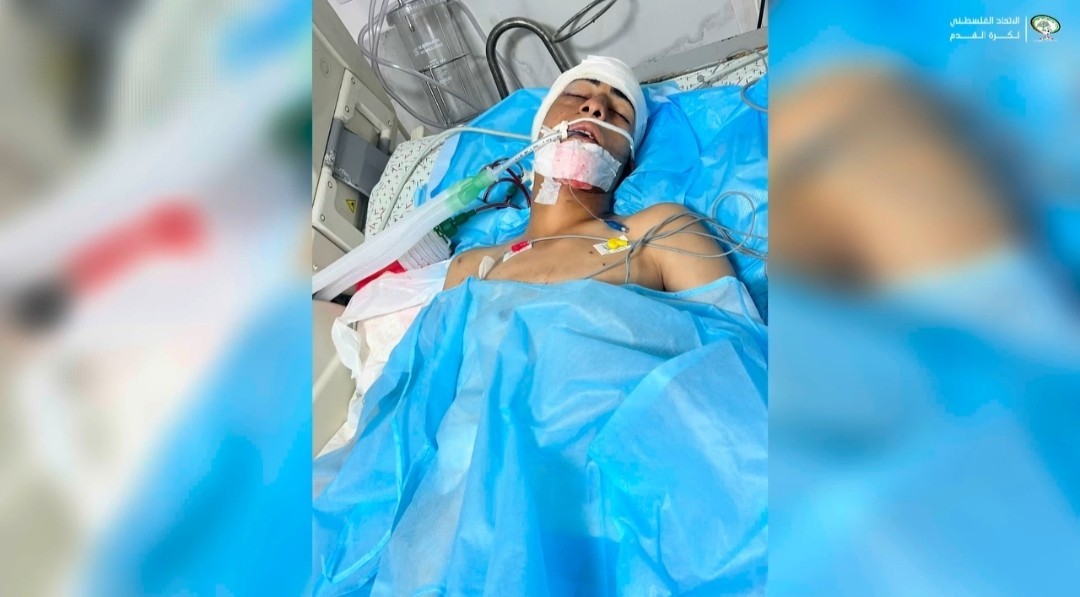
Mohammad emphasizes that his condition is critical and deteriorating He urgently needs continuous physiotherapy and neurological rehabilitation—services that are virtually nonexistent in besieged Gaza Every day without treatment reduces his chances of recovery and deepens his disability
Disability, for Mohammad, is not limited to paralysis It is the loss of independence, dignity, and control over his own body It is the pain of needing help to perform the simplest tasks—eating, turning in bed, or sitting upright It is the psychological burden of seeing his dreams collapse while the world watches in silence
*Life Trapped Between Walls and Pain*
Mohammad’s daily life no longer resembles that of a typical young man War has frozen everything: streets are destroyed, electricity is cut, hospitals overflow with the wounded, and medical equipment is scarce He spends his days lying on a narrow bed in a dimly lit room, listening to distant explosions, waiting—alongside his family—for any glimmer of hope that he might receive treatment outside Gaza
In a soft, exhausted voice, he says: “Even the simple routines I once had are gone War has stolen everything—my body, my future, and my sense of normal life”
*A Dream Evaporated*
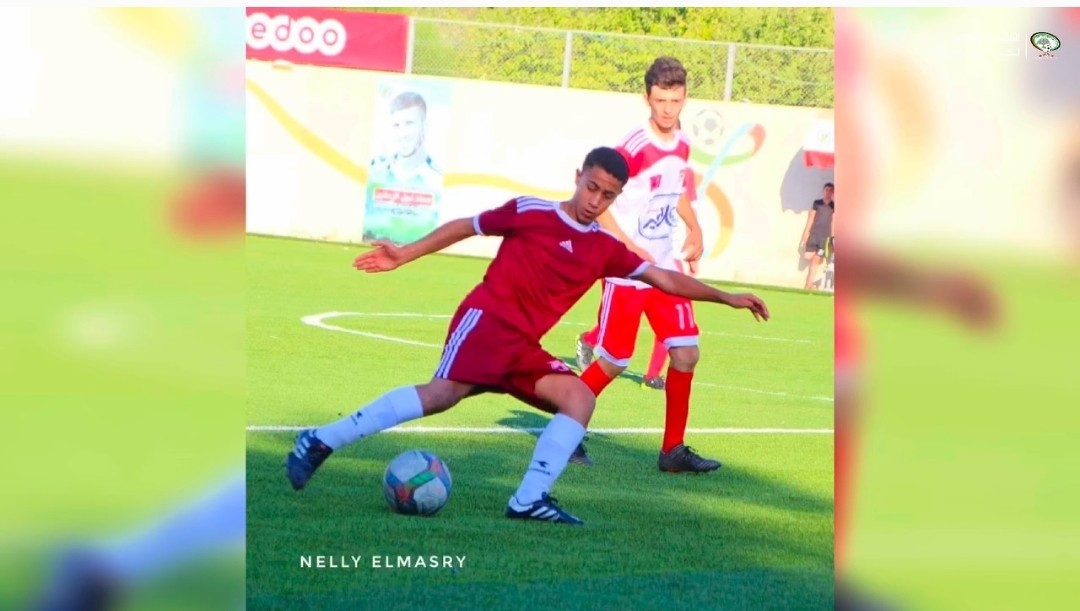
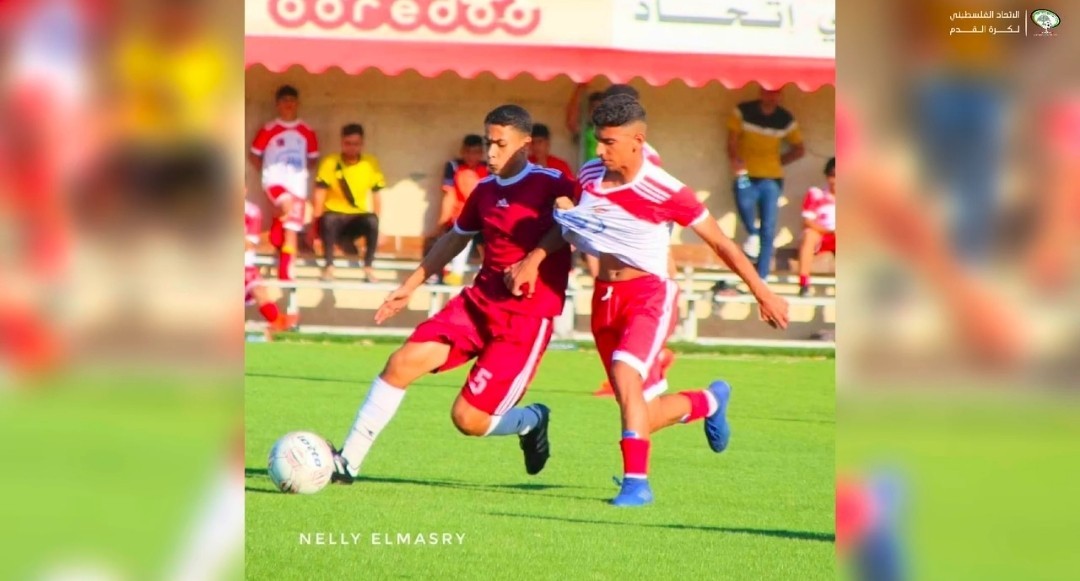
Mohammad had always dreamed of wearing the Palestinian national team jersey Football was not merely a hobby—it was his identity, his escape, and his way of resisting despair He began his early trials with Ittihad Beit Hanoun Club under coach Mohammad Al-Aimawi and team captain Mahrez Abu Odeh, who was later killed while seeking humanitarian aid
War destroyed every path forward Mohammad no longer runs toward the ball; he runs toward survival The bullet that struck his head became the final “shot” that ended his sporting ambitions
Yet, even amid devastation, Mohammad clings to a fragile thread of hope “I still dream of playing football again I know my injury may end my career, but all I need is proper treatment Maybe that is my only chance And if I can never run again, I will find another way—I will train neighborhood children one day”
Today, Mohammad appeals to humanitarian and medical institutions for urgent intervention to save him from a grim fate caused by the absence of adequate medical care in Gaza His story is not merely the story of an injured athlete—it is a mirror reflecting the collapse of Palestinian sports under the fire of war
*“A Small Movement Feels Like Victory”*
Beside Mohammad sits his mother, gently running her fingers through his hair as she once did when he returned from matches Her voice blends memory with unbearable pain “He used to run faster than the wind We chased him from afar, laughing as he returned sweaty and covered in dust Today, we celebrate if he can move a finger Every small movement feels like a great victory”
Nearby, his younger brother holds a worn-out football, whispering shyly through tears “I used to play with him every day Now I play alone I still throw the ball to him every morning, hoping he’ll run to catch it like before”
Mohammad’s treating doctor confirms that continuing his physiotherapy outside Gaza is the only real chance for him to regain partial mobility and prevent permanent deterioration
*Athletes Between Martyrdom and Disability*
Mohammad is not alone Mahmoud Al-Zaanin (22), a youth player for Khidmat Jabalia Club, lost his leg after a bombing struck his neighborhood “I was preparing for a local tournament,” he says: “Today, I am learning how to walk with crutches”
Similarly, Saleem Qadeeh (19), a basketball player from Khan Younis, suffered severe spinal injuries when his home was targeted “I can no longer play,” he says, “but I will continue coaching children Sports for us is not a luxury—it is life”
Dozens of other athletes were killed along with their families under the rubble, including Iyad Shaat, a footballer from Rafah, and Mohammad Hamdan of Al-Sadaqa Club, both of whom died with their loved ones in airstrikes
*Numbers That Cry Out*
According to the Palestinian Sports Media Federation (August 2024), the war that began on October 7, 2023, has claimed the lives of 778 athletes, including 373 football players Approximately 95% of sports facilities—fields, stadiums, and halls—have been destroyed Hundreds of wounded players now live with permanent disabilities and require rehabilitation unavailable with in Gaza
Palestinian sports have never existed in a safe environment During the First and Second Intifadas, athletes were killed by occupation bullets, stadiums were demolished, and national teams were repeatedly prevented from traveling to regional and international tournaments From Al-Yarmouk Stadium in Gaza to Dura Stadium in Hebron, sports infrastructure has been systematically targeted, while players such as Jihad Sarhan and Ahmed Khamis were killed or imprisoned in previous wars
These numbers reveal not coincidence, but a systematic targeting of the Palestinian sporting generation
*A Crime Under International Law*
International law is unequivocal Article 27 of the Fourth Geneva Convention guarantees the protection and dignity of civilians, while Article 33 prohibits collective punishment, including siege and starvation Article 51 of Additional Protocol I prohibits indiscriminate attacks against civilians
The Olympic Charter affirms that “sport is a human right,” and FIFA declares player protection a core principle Yet in Gaza, these rights remain absent
Mohammad’s case also constitutes a violation of Article 11 of the UN Convention on the Rights of Persons with Disabilities, which obliges states to protect persons with disabilities during armed conflicts and humanitarian emergencies
For Palestinian youth, sports are not games—they are a means of expression, dignity, and survival Targeting athletes is not only a crime against individuals, but an attempt to silence Palestine on the global stage
*Beyond the Final Whistle*
Mohammad, Mahmoud, Saleem, and Iyad are not merely names—they are the faces of an entire generation whose dreams were crushed at stadium gates In Gaza today, sports are no longer played on green fields, but written in blood, pain, and rubble
Yet Mohammad has not lost his match He is still playing—this time in a greater arena: the battle for life, dignity, and the right to heal For him, sports are no longer just a dream; they have become a daily act of resistance against disability, siege, and erasure


