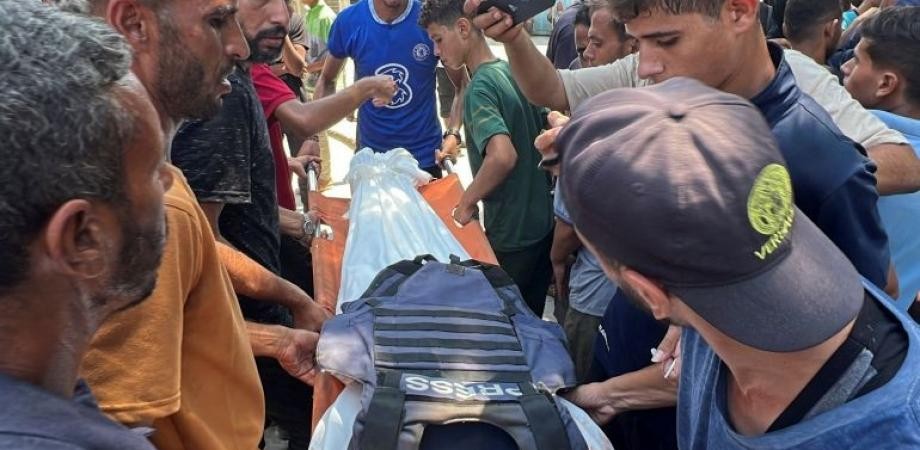
Gaza has turned into one of the most perilous places on Earth for journalists—reporting has become a life‑or‑death act.
Two years into what many observers call Israel’s relentless campaign, the number of media workers killed in this conflict has outpaced any war in recent memory, transforming the Strip into what international watchdogs describe as “the world’s largest graveyard for journalists.”
According to Anthony Bellanger, Secretary‑General of the International Federation of Journalists, targeting reporters is now part of a strategy of war: silencing witnesses, shaping narratives, and suppressing truth.
With foreign journalists largely barred from entry, Palestinian reporters continue to risk everything—exposing horrors amid hunger, displacement, constant fear, and death. Their footage, their photos, their words are perhaps the only window the world has into Gaza’s devastation—and each report could be their last.
Bellanger condemned the silence of global powers: nations continue to supply arms while turning a blind eye to the targeting of those who document war crimes. Journalists in Gaza often operate with minimal protection, and the slogans of justice feel distant, perhaps illusory.
Yet despite the risk, they persist: for them, silence would be surrender. Because when truth dies, so does accountability—and with it, humanity itself.